Commercial glazing in Belgravia Victoria covers everything from a single shopfront on the high street to a full curtain wall on a new office block, and the same three questions apply to all of it: will the glass keep people and stock safe, will it satisfy the fire and impact rules in the Building Regulations, and what will it cost to heat and cool the space behind it. We design, fabricate and fit shopfronts, curtain walling, structural and unitised facades, and internal fire-rated and acoustic partitions for businesses across the district. Below we cover system types, glass and frame choice, regulations, budgets and maintenance.
Key insights
- Commercial glazing in Belgravia Victoria raises safety, energy performance, daylight and sound control for shops, offices, hospitality venues and industrial units.
- The main systems are curtain walling, structural silicone glazing, unitised panels, internal partitions and slimline heritage profiles for conservation streets.
- Glass choices combine low-E and solar-control coatings with laminated or toughened safety glass, set in thermally broken frames to limit heat loss and overheating.
- Every installation is designed to Approved Documents B, K, L and M and the relevant BS EN product standards for fire, impact, access and thermal performance.
- We supply tested systems with secure framing, multi-point locking and written guarantees suited to Belgravia Victoria weather and planning constraints.
Key Benefits of Commercial Glazing for Belgravia Victoria Businesses
A glazing upgrade in Belgravia Victoria pays back in several ways at once. Laminated and toughened glass in certified frames resists impact, slows a forced entry and removes the hazard of sharp fragments, which supports both your security plan and your fire strategy.
Modern sealed units with low-E coatings keep internal temperatures steady and take load off the heating and cooling plant, so running costs and carbon fall together. Acoustic laminates cut traffic noise.
Well-controlled daylight improves how a space feels to work in; staff see better, glare drops and productivity tends to follow. On the street, clear low-iron glass and slim framing give a premises a confident, open look that strengthens the brand. Passers-by can see in, which draws customers through the door.
Core Types of Commercial Glazing Systems Explained
Each project has its own targets, yet most commercial glazing in Belgravia Victoria is built from a handful of system families, each engineered around particular safety, thermal and compliance needs. The ones we install most are curtain walling, structural glazing, unitised facades and high-performance internal partitions.
Stick curtain walling gives large areas of glass on a grid of mullions and transoms, with pressure plates, gaskets and thermal breaks keeping the wall airtight and dry. Structural silicone glazing hides the frame altogether, bonding the glass to a carrier so loads transfer through an engineered joint.
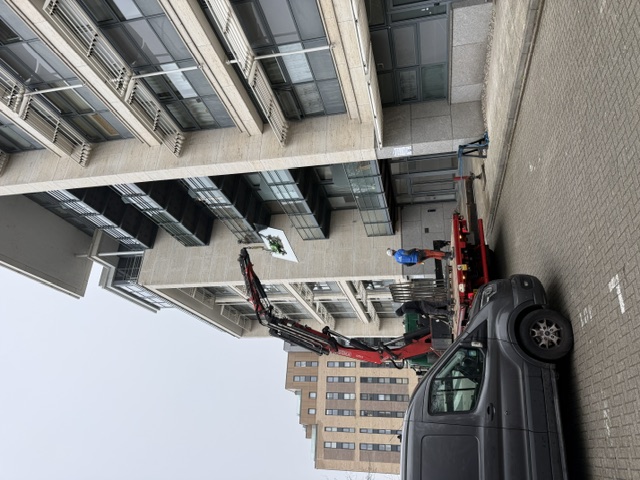
Unitised systems are assembled as complete panels in the factory and craned into place, which speeds installation and keeps quality consistent on taller or awkward buildings. Inside, fire-rated and acoustic glass partitions divide floors into compartments, protect escape routes and keep noise under control.
For listed buildings and conservation streets, slimline steel-look or aluminium heritage profiles carry modern insulated glass without altering the historic appearance.
How to Choose the Right Glazing for Your Belgravia Victoria Premises
Glazing affects comfort, safety and bills every day, so the specification for a Belgravia Victoria premises should start from what the building must do rather than from a look in a brochure. Put figures on the targets: U-value, sound reduction, g-value for solar gain, impact class, privacy and how often the glass can realistically be cleaned.
Those targets then translate into product specifications and the compliance checklist, from Building Regulations and the fire strategy to any security standard your insurer requires. Look at which way each elevation faces and what surrounds it.
Treat the appearance of the glass as a performance parameter too. Light transmission, external reflectance and colour rendering change how a shop interior reads from outside and how easily people find their way around inside.
Last, question the fitting details: fixing method, tolerances, how the frame meets the structure, and where water drains. Choose systems with test certificates, written warranties and performance that can be measured once the building is in use.
Choosing Commercial Glazing Materials, Frames and Glass
Choosing commercial glazing for a Belgravia Victoria building means matching the material, the frame system and the glass make-up to the structural loads, the use of the building and its exposure. Aluminium, steel, timber and composite frames differ in strength, thermal performance and their suitability for heavy insulated or laminated units, and each has its place. The glass itself must be specified for safety, with impact resistance, fire performance and compliance with the relevant British Standards and Approved Document K considered at the outset so the finished system protects the people using it.
Comparing Glazing Material Options
Glass, frame and coating have to be assessed as one assembly rather than three separate purchases. The sensible first step is ranking what matters most for the site: structural safety, heat control, noise, daylight or security.
Laminated and toughened glass satisfy the human-safety requirements of BS 6262 and resist attack; insulated units improve U-values under Part L and cut condensation on cold mornings. Low-E and solar-control coatings are chosen by orientation, with the heavier solar control reserved for south and west elevations that overheat in Belgravia Victoria's warmer months.
Newer options include spectrally selective coatings, electrochromic glass that tints on demand and stiffer structural interlayers. Confirm sealants and edge details are compatible with any of them.
Frame Types And Performance
The frame carries the load, controls air leakage and decides how much heat bridges through the facade, so it deserves as much attention as the glass. The usual candidates for Belgravia Victoria projects are thermally broken aluminium, steel, timber and hybrid composite systems.
Durability comes from matching the alloy, finish and drainage design to the local mix of wind-driven rain and urban pollution and to how often the facade will be maintained. Polyamide thermal breaks, insulated pressure plates and well-shaped gaskets keep the internal metal warm enough to avoid condensation on the fixings.
Visually, the depth of the sightlines, the mullion centres and the cover-cap profile need to be coordinated with the facade grid, the lighting design and the brand signage.
The engineering check comes last: mullion and transom spans, bracket anchorages and movement joints must take wind load, floor-slab deflection and thermal expansion without breaking seals or endangering anyone below.
Glass Specifications For Safety
Once the frame is settled, the glass specification determines how the facade behaves when something hits it, when fire breaks out, when a pane breaks and when people lean on it. We map the risk zones first: pavement-level glass, escape routes, stair enclosures and exposed corners. Each zone then gets a class under BS EN 12600 for impact, BS 6262 for application and BS EN 356 where manual attack resistance is required.
Toughened or heat-strengthened glass goes where impact is the main concern, laminated glass where the pane must stay in place after breaking, and fire-rated units where escape routes need compartmenting. Durability depends on the right interlayer, polished or arrissed edges and sealants that will not attack the laminate. Acoustic, solar and privacy layers are added only after confirming they do not invalidate the safety classification or the test certificates.
Energy‑Efficient Commercial Glazing for Belgravia Victoria’s Climate
Belgravia Victoria's damp, changeable weather makes energy-efficient glazing a running-cost decision rather than a nice-to-have. A commercial facade here has to hold heat in through long winters, keep solar gain out in summer and avoid condensation for most of the year. Double or triple glazing with low-E coatings, warm-edge spacers and argon or krypton fill keeps the inner pane warm, protects finishes and furnishings from moisture and keeps occupants comfortable.
Spectrally selective coatings admit visible light while blocking much of the infrared. Thermally broken aluminium or composite frames remove the cold bridge around the edge and the mould that follows it. Lower HVAC demand means lower bills and emissions, which helps the building meet the tightening limits in Approved Document L and whatever ESG reporting your organisation has signed up to.
Security and Safety Upgrades With Commercial Glazing
A commercial glazing upgrade in Belgravia Victoria is also a security upgrade. The glass line is the first physical barrier protecting staff, stock and equipment, and modern systems bring together laminated security glass, multi-point locking and tested frames that stand up to forced entry, accidental impact and, on higher-risk sites, blast loading.
The security level can be set to the risk at each elevation while still respecting decorative glazing or conservation guidance, using interlayers, films and bespoke profiles that satisfy the planners.
The usual upgrade routes are:
- Impact-resistant laminates that hold together when broken, so intruders are delayed and nobody is cut.
- Fire-rated glazing that contains smoke and flame for a rated period while keeping sight lines open.
- Security films and glass-break sensors that detect an attack, slow it down and report it to your access control or alarm monitoring.
Designing Belgravia Victoria Shopfronts and Retail Façades That Stand Out
On Belgravia Victoria's shopping streets the frontage is the first thing a customer judges, but a good shopfront is engineered before it is styled. We start with laminated or toughened glass classified to BS EN 12600, framed in a system that accepts anti-intruder hardware and multi-point locks without thickening the sightlines.
To make the shop stand out, low-iron glass removes the green tint so displays show their true colours, and ceramic frit or printed interlayers add pattern and branding without a separate signboard. In conservation areas, mullion positions, stallriser heights and fascia proportions are matched to the neighbouring historic frontages, and details such as etched logos, back-painted panels or concealed LED channels are built to cope with knocks, thermal movement and daily opening and closing.
Commercial Glazing for Belgravia Victoria Offices, Industrial Units and Hospitality
Offices, industrial sheds and hospitality venues in Belgravia Victoria each put different demands on their glazing, but all three need a balance of structural strength, occupant safety and energy performance. Impact class, fire compartmentation, acoustic performance and U-value all have to be set so the assembly meets current regulations and copes with daily use. Specifying for the actual environment rather than a generic one lowers risk, keeps lifecycle costs predictable and gives staff, visitors and customers a safe, comfortable space.
Glazing Solutions For Offices
Office glazing in Belgravia Victoria has to satisfy several masters: safety, noise, energy and brand image, often on streets where the surrounding architecture sets the tone. The specification has to meet BS 6262, Part L and the insurer's security expectations while keeping frames slim and solar gain under control.
Three objectives shape most office schemes:
- Safety and resilience – laminated or toughened units classified to BS EN 12600, secure fixings and manifestation markings so people do not walk into clear glass.
- Thermal and acoustic performance – low-E coatings, warm-edge spacers and argon-filled cavities to steady temperatures and keep city-centre noise out of meeting rooms.
- Identity and comfort – ceramic frit, printed interlayers or films that reference the surrounding facades while handling glare and privacy.
Industrial And Hospitality Glazing
Industrial units and hospitality venues in Belgravia Victoria often ask more of their glass than offices do. Loading bays, workshops and kitchens expose glazing to impacts, thermal shock and constant traffic, while bars and hotels need the glass to look good and keep guests comfortable.
For industrial premises the priorities are toughened or laminated safety glass, robust framing and compliant fire-rated screens between production and office areas. Solar-control glass or film cuts glare on screens and control panels and keeps the internal temperature stable, reducing cooling costs and heat-related downtime.
Hospitality is a balance between openness and privacy. Acoustic laminated units shield diners and sleeping guests from street noise, and low-iron glass keeps views crisp. Decorative films add branding, zoning and privacy to existing glass without structural work, and safety films upgrade older panes to a shatter-resistant standard at modest cost.
UK Regulations and Belgravia Victoria Planning Rules for Commercial Glazing
Getting a new shopfront or curtain wall in Belgravia Victoria through building control and planning first time depends on designing to the rules from day one, rather than trying to fit the paperwork around a finished design.
The framework has three layers:
- Building Regulations – Approved Documents B, K, L and M covering fire resistance, impact-safe glazing in critical locations, U-values and g-values, and accessible entrances with manifestation at the right heights.
- Local planning policy – the council may control frontage design, reflectivity, signage and illumination, with tighter rules in conservation areas and designated regeneration zones.
- Product and design standards – insulated units to BS EN 1279, toughened glass to BS EN 12150, impact classification to BS EN 12600 and laminates to BS EN 14449, plus wind-load and line-load calculations for mullions, brackets and fixings.
Talk to building control early, submit the glazing calculations with the application, and ask your fabricator for test evidence that can be traced to the actual products supplied.
Costs, ROI and Funding Options for Commercial Glazing in Belgravia Victoria
A commercial glazing budget in Belgravia Victoria needs more than a price per square metre. It should cover the products, specialist installation, access equipment, site safety and the maintenance the facade will need over its life. Grants and energy-efficiency incentives can take some of the weight off the initial outlay while helping the building meet thermal and safety standards. Setting the cost against lower heat loss, better comfort and reduced security risk gives a payback period you can take to a board or a lender, and shows which upgrades to do first.
Typical Project Cost Breakdown
Buildings differ, but a commercial glazing project in Belgravia Victoria tends to split its cost in a predictable pattern across design, supply, installation and the checks that prove performance afterwards.
-
Design and compliance (roughly 15–25%) Surveys, structural and thermal calculations, coordination with conservation requirements and the brand design, plus risk assessments and CDM duties.
-
Materials and fabrication (roughly 45–60%) Performance glass, framing systems, coatings, fire-rated assemblies, hardware, factory assembly and quality control.
-
Installation and commissioning (roughly 20–40%) Access equipment, trained glazing crews, temporary works, edge protection, air-leakage testing and the final inspections that confirm acoustic, thermal and security performance.
Grants, Incentives And Payback
Knowing where the money goes makes it easier to judge how grants, incentives and payback improve the business case in Belgravia Victoria. The first step is matching each upgrade, whether energy, safety or facade performance, to the funding that may apply, such as regional low-carbon programmes or local security improvement schemes.
Then build a simple cashflow. Include business rates relief where it applies, capital allowances on qualifying plant, and any manufacturer rebates. Use cautious energy-saving figures tied to the Part L baseline rather than optimistic marketing claims.
Run payback and net present value over ten to twenty-five years, allowing for maintenance, coating life and any safety-critical replacements. Do the fastest-paying measures first, provided they do not weaken impact, fire or accessibility compliance, and phase the rest as funding rounds open.
Maintaining Commercial Glazing in Belgravia Victoria: Repairs and Replacement
Commercial glass can look sound long after its seals or fixings have started to fail, so a planned maintenance regime is essential for safety, energy performance and compliance in Belgravia Victoria's busy urban setting. Waiting for a breakage is the expensive way to find out.
A sensible programme includes:
- An annual inspection with glass thickness gauges, moisture metres and a thermal camera to pick up failed seals, micro-cracks and frame movement early.
- Repairs prioritised by consequence, starting with glass near walkways, crowded areas and escape routes, and upgrading to laminated or toughened units where the current glass falls short.
- A phased replacement plan that introduces low-E or solar-control units, matching gaskets and tested anchorages, with every change recorded for building control and the building's safety file.
Future Trends in Commercial Glazing for Belgravia Victoria Businesses
Planning for the long term also means watching the technology and regulation that are changing what a Belgravia Victoria facade can do. Electrochromic and other dynamic glazing is moving from showcase projects into ordinary offices, adjusting tint for solar gain, glare and privacy through the day and protecting furnishings and IT kit from heat.
Structural glazing is stretching to larger spans and thinner frames while still meeting impact and fire requirements. Triple glazing, warm-edge spacers and newer low-E coatings give headroom for the next round of energy rules.
Further out, building-integrated photovoltaics turn the facade into a generator, sensors laminated into the glass report on temperature and condition, and blast-rated systems are becoming more affordable for higher-risk sites. Together they let a building look better, run with less risk and meet stricter safety standards at the same time.
Find out more about our Belgravia Victoria glaziers, or see the full commercial glazing service for Victoria.
Frequently Asked Questions
How Does Commercial Glazing Impact Staff Wellbeing and Productivity in Belgravia Victoria Workplaces?
Glazing shapes a workplace more than most fit-out decisions. Good daylight with controlled glare reduces eye strain and the afternoon slump, and steady internal temperatures remove the distraction of a hot window seat in summer or a cold one in winter. Spectrally selective coatings and low U-value units achieve both without blinds permanently drawn. Acoustic laminates keep street noise out of the Belgravia Victoria office floor, and laminated safety glass in compliant frames means nobody has to worry about the glass itself.
Can Glazing Specifications Support Acoustic Privacy in Busy Belgravia Victoria City-Centre Locations?
They can, and in central Belgravia Victoria they often have to. Acoustic laminated glass with a sound-damping interlayer, panes of different thickness and a wider cavity between them reduce traffic and crowd noise substantially, and triple glazing adds further gains at low frequencies. The glass only performs inside a well-sealed frame fitted with tested details, so the frame and installation matter as much as the unit. Switchable privacy glass can be added where visual confidentiality is needed without losing daylight. Set a target dB reduction at the start, check it against Part E where it applies, and test on site once fitted.
How Does Commercial Glazing Affect Fire Evacuation Strategies and Emergency Signage Visibility?
Glazing is part of the fire strategy, not just something it has to work around. Fire-rated screens and doors hold back heat and smoke for their rated period while keeping exits visible, which helps people move in the right direction. Low-iron, low-reflection glass keeps illuminated exit signs legible in dim or smoky conditions. On larger buildings, glazing can be tied into dynamic wayfinding, with illuminated frames or switchable panels changing state on alarm. Your fire risk assessment should record where each glazed element sits on an escape route.
What Are the Implications of Commercial Glazing for Insurance Premiums and Policy Terms?
Insurers look closely at the glass line because it is where most break-ins and many injury claims start. Certified laminated or security-rated glass in tested frames, with multi-point locking and a maintenance record, can earn better terms and lower excesses on a Belgravia Victoria policy. The reverse also applies: glazing that falls short of current fire, impact or security standards can bring exclusions, higher excesses or conditions requiring upgrades before cover is confirmed. Keep the product test data, installation certificates and inspection reports together, and tell your broker about upgrades so the premium reflects the reduced risk.
Can Commercial Glazing Be Integrated With Smart Building Management and Automation Systems?
Yes. Modern facades can carry sensors that monitor temperature, solar gain, occupancy and even glass condition, and feed that data to a building management system over BACnet or Modbus. The BMS can then drive motorised blinds, electrochromic tint, night cooling and ventilation in response, improving comfort and cutting energy use with no manual input. When specifying, check the sensor and control cabling can be concealed within the framing, that the glass still meets its safety and durability classes with the electronics in place, and that the system fails to a safe state if power or communications drop.
Summary
A commercial glazing project in Belgravia Victoria is a chance to make the whole building envelope safer, warmer and cheaper to run. The right systems, specified to UK regulations and tuned for energy performance, cut risk, bills and carbon, and a simple inspection routine keeps them that way. Call us for a free site survey and a detailed quotation for your premises.